


How to Choose The Right Care Home for Your Loved One
The right care home provides not just physical safety, but genuine quality of life — comfort, dignity, stimulation, and the kind of human connection that makes later life feel meaningful rather than merely managed.

This guide walks you through every stage of the process: understanding what different types of care home offer, how to assess whether a care home is right at all versus alternatives like home care, what to look for during visits, how funding works, and the questions that separate a genuinely good home from one that simply looks good on paper.
At a Glance: Your Care Home Decision Checklist
| Step | What to Do |
|---|---|
| 1. Assess needs | Get a care needs assessment from your local council |
| 2. Identify care type | Residential, nursing, dementia, or specialist care? |
| 3. Consider alternatives | Is home care, live-in care, or respite care more appropriate? |
| 4. Research homes | Check CQC ratings, read reviews, shortlist 3 to 5 |
| 5. Visit in person | Tour at different times, speak to staff and residents |
| 6. Understand costs | Get a full fee breakdown and explore funding options |
| 7. Review the contract | Check notice periods, fee increase clauses, and what is included |
| 8. Plan the move | A planned transition reduces distress and aids settling |
Do You Actually Need a Care Home? Understanding All Your Options
Before committing to a care home placement, it is worth considering the full spectrum of care options. A care home is not always the only — or even the best — answer, particularly in the early stages of a care journey.
Home Care

Home care (also called domiciliary care) involves a professional carer visiting the person in their own home, typically for 30 minutes to several hours a day. It suits people who:
- Need support with daily tasks such as washing, dressing, or meal preparation
- Are in the early stages of a condition such as dementia
- Value the familiarity and independence of their own environment
- Have a strong local support network from family and friends
Home care services can be arranged privately or through a local authority following a needs assessment. Costs typically range from £18 to £35 per hour depending on the provider and region. For lower-level care needs, this can be significantly more affordable than residential care.
Lidder Home Care, part of the Lidder Care family, provides professional home care in Mansfield and the surrounding Nottinghamshire area, including visiting care, medication assistance, personal care, and companionship services.
Live-In Care
Live-in care places a professional carer in the person’s home full-time. It delivers a level of one-to-one attention that is difficult to replicate even in high-quality care homes, and it allows the person to remain in familiar surroundings. For couples, it can be particularly cost-effective compared to two separate care home placements. Weekly live-in care costs are broadly comparable to residential care home fees.
Respite Care
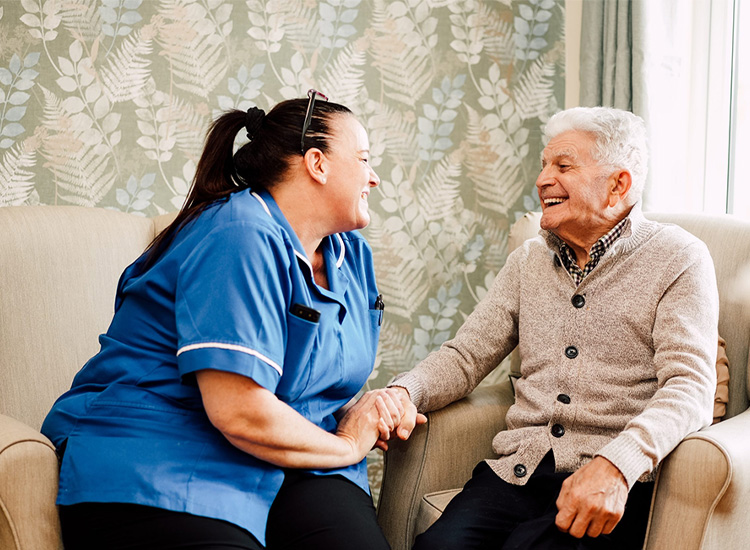
Respite care provides short-term, temporary residential care — typically for a few days to several weeks. It is valuable when:
- A family carer needs a break
- Someone is recovering from a hospital admission
- A family wants to trial residential care before committing
Both Newgate Lodge Care Home and Lowmoor Nursing Home offer respite care for those requiring short-term support in a professional environment.
When Is a Care Home the Right Choice?
Data from NHS England suggests that around 400,000 people in England live in care homes at any given time, and the decision to move to residential care typically arises when:
- Care needs have become too complex or intensive to safely manage at home
- Overnight supervision is required
- A person is at significant risk of falls, self-neglect, or medical deterioration
- A cognitive condition such as dementia has reached a stage where continuous professional monitoring is needed
- Family carers are experiencing burnout or are unable to provide safe levels of support
The Care Act 2014 established that local authorities in England have a statutory duty to assess anyone who appears to have care needs, regardless of their financial situation. A formal care needs assessment is the recommended starting point before any decision is made.
“The hardest part for most families isn’t finding the care home — it’s giving themselves permission to consider one. But asking for professional help isn’t giving up on someone. In our experience, the right placement often gives families their loved one back, because they can visit as a son or daughter again, rather than as an exhausted carer.”
What Are the Different Types of Care Home?

A care home is a registered establishment providing personal care, accommodation, and support for adults who can no longer live independently. The term covers several distinct categories, each regulated by the Care Quality Commission (CQC).
Residential Care Homes
Residential care homes provide personal care — help with washing, dressing, eating, mobility, and medication management — alongside accommodation, meals, and social activities. They do not employ registered nurses on site, making them suitable for people whose needs are primarily personal rather than clinical.
Best for: Older adults who need daily support with personal care tasks but do not require regular nursing intervention.
Newgate Lodge Care Home in Mansfield is a purpose-built residential care home providing care for up to 60 residents, with bespoke en-suite rooms and a dedicated programme of activities and social engagement.
Nursing Homes
Nursing homes (sometimes called nursing care homes) provide all the services of a residential home plus 24-hour on-site nursing care from qualified registered nurses. They are appropriate for people with complex health conditions, post-operative recovery needs, or conditions that require regular clinical assessment and intervention.
Best for: Those with chronic health conditions, significant physical dependency, reduced mobility, or needs that require regular nursing oversight.
Lowmoor Nursing Home in Kirkby-in-Ashfield is a 48-bed, purpose-built nursing home with a specialist clinical team including a Registered Manager, Clinical Lead Nurse, and a team of Registered Nurses providing round-the-clock care.
Dementia Care Homes
Dementia care — whether provided within a residential or nursing home setting — involves specially designed environments, trained staff, and tailored therapeutic activities to support people living with Alzheimer’s disease, vascular dementia, Lewy body dementia, and other related conditions. The physical environment matters significantly: secure outdoor spaces, clear wayfinding, sensory stimulation, and consistent staff relationships all contribute to reduced anxiety and improved quality of life.
Best for: People at any stage of dementia, with the level of clinical support needed (residential versus nursing) determined by the individual’s overall health.
Both Newgate Lodge and Lowmoor offer specialist dementia care, with Newgate Lodge holding the Dementia Quality Mark in recognition of its specialist expertise.
Specialist Care Homes
Some homes provide care for specific conditions or client groups, such as those with behaviours that may challenge, acquired brain injuries, Parkinson’s disease, or end-of-life palliative care needs. Lowmoor Nursing Home’s specialist care offer includes dedicated units for those with complex behavioural needs.
The Difference Between a Care Home and a Nursing Home: A Quick Reference
| Feature | Residential Care Home | Nursing Home |
|---|---|---|
| Personal care | Yes | Yes |
| Meals and accommodation | Yes | Yes |
| Activities and social programmes | Yes | Yes |
| Qualified nurses on site 24/7 | No | Yes |
| Complex health condition management | Limited | Yes |
| CQC regulated | Yes | Yes |
| NHS Funded Nursing Care contribution | Not applicable | Yes (£254.06/week in 2025/26) |
| Average weekly cost (self-funder, UK) | ~£1,300 | ~£1,512 |
How to Assess Care Needs Before Choosing

What Is a Care Needs Assessment?
A care needs assessment is a formal evaluation carried out by a local authority social worker to determine what support a person requires and whether they are eligible for council-funded care. Under the Care Act 2014, anyone who appears to have care needs is entitled to a free assessment, regardless of their financial situation.
The assessment covers:
- Physical health and mobility
- Mental health and cognitive function
- Ability to carry out Activities of Daily Living (ADLs)
- Emotional and social wellbeing
- The informal support already in place from family or friends
Following the assessment, the local authority will determine whether the person meets the eligibility threshold under the Care Act and, if so, produce a care and support plan. A financial assessment (means test) will follow if residential care is required.
Understanding the Financial Threshold
In England for 2025/26, the capital threshold for local authority funding is:
- Above £23,250: You are expected to fund your own care in full (self-funder)
- Between £14,250 and £23,250: You contribute on a sliding scale; the council funds the remainder
- Below £14,250: The council meets the majority of care costs
Capital includes savings, investments, and — for permanent residential care — typically the value of the person’s property. Certain disregards apply, including cases where a spouse or dependent remains in the family home.
NHS Continuing Healthcare (CHC)
Where a person’s primary need is a health need rather than a social care need, they may be eligible for NHS Continuing Healthcare — a funded package that covers the full cost of care, including in a care home. Eligibility is assessed using the NHS Decision Support Tool across 12 care domains, with a Primary Health Need test determining full CHC eligibility. Nationally, around 60,000 people in England receive CHC funding. If CHC is not awarded, those in nursing homes may be eligible for NHS Funded Nursing Care, which contributes £254.06 per week directly to the nursing home in 2025/26.
What to Look for When Visiting a Care Home

Why You Should Always Visit in Person
No website, brochure, or inspection report can fully capture what it feels like to live in a care home. An in-person visit lets you observe staff interactions, assess the atmosphere, speak with residents and their families, and develop an instinct for whether this is somewhere your loved one would thrive.
Request to visit at more than one time — once during a weekday and once at a weekend or evening — to gain a realistic picture of day-to-day life rather than a curated show.
Key Things to Observe During a Visit
The physical environment:
- Is the home clean, well-maintained, and free from unpleasant odours?
- Are bedrooms personalised and does the home encourage residents to bring their own belongings?
- Are outdoor spaces accessible and well-maintained?
- For dementia care: are there memory cues, clear signage, and safe garden areas?
The staff:
- Do staff interact with residents warmly and by name?
- Do staff seem rushed, or do they have time to stop and chat?
- What is the staff-to-resident ratio, and does this change overnight?
- How long have senior staff been at the home? High turnover is a warning sign.
- What dementia-specific training have staff completed?
The residents:
- Do residents appear comfortable, engaged, and well-presented?
- Are there residents spending time together, or do they appear isolated?
- Is there evidence of an active activities programme?
The food:
- Can you see the menu and try the food?
- Are there options for residents with dietary requirements, cultural preferences, or swallowing difficulties?
- Are snacks and drinks available throughout the day?
The management:
- Will you be able to meet the home manager?
- How are complaints handled, and can you see the complaints policy?
- How does the home communicate with families, and how frequently?
“When families visit Newgate Lodge, we encourage them to come for a meal, meet the team on the floor, and speak to relatives of current residents. The paperwork tells you very little. The real question to ask yourself when you leave is: could I imagine my mum living here? If the answer is yes, that matters far more than the brochure.”
Questions to Ask the Care Home
- What does the weekly fee include, and what is charged as an extra?
- What happens if my loved one’s needs increase — will they be able to stay?
- What is the home’s policy on end-of-life care?
- How is the care plan developed and reviewed?
- Can I see the most recent CQC inspection report?
- What is the notice period if we want to leave?
- How are fee increases handled, and how much notice is given?
How to Use CQC Ratings When Choosing a Care Home
What Is the CQC?
The Care Quality Commission (CQC) is the independent regulator of health and social care in England. It inspects registered care homes against five key standards and publishes inspection reports publicly.
The Five CQC Standards
All care homes are assessed across five domains:
- Safe: Are people protected from abuse and avoidable harm?
- Effective: Does care, treatment, and support achieve good outcomes?
- Caring: Do staff treat people with compassion, dignity, and respect?
- Responsive: Are services organised around each person’s needs?
- Well-led: Does strong governance drive continuous improvement?
Each domain is rated Outstanding, Good, Requires Improvement, or Inadequate. The overall rating reflects performance across all five.
Both Newgate Lodge Care Home and Lowmoor Nursing Home hold “Good” CQC ratings across all five inspection areas — a consistent standard of quality that provides families with confidence when making this important decision.
How to Read a CQC Report
CQC inspection reports are available free at cqc.org.uk. When reading a report, look beyond the headline rating:
- Check the date of the most recent inspection — older reports may not reflect the current home
- Read the “What the service does well” and “Areas for improvement” sections in full
- Look at historical ratings to understand whether quality is improving or declining
- Pay attention to the Caring domain — it often reveals the most about day-to-day experience
Understanding Care Home Costs and Funding
How Much Does a Care Home Cost?
Care home fees vary significantly by region, home type, and individual care needs. Based on 2025 data, average self-funded weekly fees in England are:
| Care Type | Average Weekly Cost (Self-Funder, England) |
|---|---|
| Residential care | ~£1,300 |
| Residential dementia care | ~£1,375 |
| Nursing care | ~£1,512 |
| Nursing dementia care | ~£1,585 |
| Respite care (residential) | ~£1,377 |
Costs in the North of England and East Midlands — where Lidder Care operates — tend to sit below the national average, making quality care more accessible than in London or the South East.
Always ask for a full breakdown of fees. Reputable homes will provide a clear written contract detailing exactly what is included and what attracts additional charges (such as hairdressing, specialist therapies, or additional outings).
Funding Options Explained
Self-funding: Where assets (including property) exceed £23,250, the full cost of care is met privately. Self-funders should seek independent financial advice, as care funding is a complex area with significant long-term implications.
Local authority funding: Following a needs and financial assessment, the local authority may fund or part-fund residential care. The council sets a standard rate it will pay, and families wishing for a more expensive home may be asked to pay a “top-up fee” to cover the difference.
NHS Continuing Healthcare (CHC): Full funding for those whose primary need is a health need. Assessment is free to request through the local NHS Integrated Care Board.
NHS Funded Nursing Care (FNC): A contribution of £254.06 per week (2025/26) paid by the NHS directly to nursing homes for eligible residents who do not qualify for full CHC.
Attendance Allowance: A non-means-tested benefit available to those over State Pension age with care needs. Worth up to £108.55 per week (2025/26) and does not affect eligibility for other benefits.
Deferred Payment Agreements (DPAs): Allow people to defer paying care costs secured against the value of their property, so they do not have to sell their home immediately to fund care.
You can read more about funding options on the Lidder Care advice hub.
Care Home vs Nursing Home: Which Is Right?
How to Know Whether Residential or Nursing Care Is Needed
The distinction between a residential care home and a nursing home is primarily clinical. If your loved one’s needs are principally personal — help with washing, dressing, meals, and companionship — a residential home is likely appropriate. If their condition involves regular clinical intervention, management of complex health conditions, or significant risk that requires nursing oversight, a nursing home is the correct setting.
Common reasons a nursing home is recommended include:
- Parkinson’s disease with significant motor impairment
- Advanced dementia with associated physical dependency or swallowing difficulties
- Stroke-related complex needs
- Catheter or PEG (percutaneous endoscopic gastrostomy) tube management
- Post-surgical recovery requiring wound care or IV management
- Insulin-dependent diabetes requiring clinical monitoring
- Significant falls risk requiring clinical assessment
The care needs assessment conducted by the local authority will typically indicate which level of care is required. A GP or specialist can also provide guidance.
Can Someone Move from Residential to Nursing Care?
Yes — and planning for this possibility is important when choosing a care home provider. At Lidder Care, families benefit from continuity of care: those who begin in residential care at Newgate Lodge can, if their needs increase, transition to nursing care at Lowmoor Nursing Home within the same family-run group. This avoids the significant distress of moving to an entirely unfamiliar provider and team.
Choosing a Dementia Care Home: Additional Considerations

What Makes a Dementia Care Home Different?
A specialist dementia care home provides an environment and care model specifically designed to support people living with cognitive impairment, including Alzheimer’s disease, vascular dementia, and Lewy body dementia.
Beyond standard residential or nursing care, look for:
- Physical design: Dementia-friendly environments feature clear wayfinding, reduced visual clutter, sensory rooms, secure outdoor spaces with garden access, and familiar domestic features that support orientation and reduce anxiety
- Staff training: Look for evidence of specialist dementia training such as the Dementia Care Mapping approach, or validation therapy techniques
- Activities: Meaningful occupation — not just entertainment — is central to dementia care. Reminiscence therapy, music therapy, life history work, and tailored sensory activities support cognitive engagement and emotional wellbeing
- Person-centred care plans: Each person’s life history, preferences, triggers, and routines should inform an individual care plan, not a one-size-fits-all approach
- Family involvement: Good dementia homes actively involve families in care planning and keep communication open and honest as the condition progresses
Newgate Lodge holds the Dementia Quality Mark, an external accreditation recognising specialist expertise in dementia care. Lowmoor Nursing Home provides dedicated dementia nursing care for those with more advanced needs and associated physical health complexity.
For more guidance, read our article on when someone with dementia should go into a care home.
How to Compare Care Homes: A Practical Framework
When you have visited several homes and are comparing options, use the following framework to make a structured decision:
The Five Factors That Matter Most
1. Care quality and CQC rating The CQC rating is a starting point, not an endpoint. Read the full report. “Good” across all five domains is the standard to look for.
2. Staff culture and continuity Long-tenured, engaged staff are the single greatest indicator of a home’s quality. Ask how long the home manager has been in post. Ask about staff turnover. Watch how staff interact with residents when they think no one is watching.
3. Person-environment fit The best care home in the country is only as good as its fit for the individual. Consider your loved one’s personality, interests, social preferences, and daily routines. A large, busy home suits some people; a quieter, more intimate setting suits others.
4. Location and visiting practicalities Regular family visits are closely associated with better resident outcomes. A home that is difficult to reach reduces the likelihood of frequent visits. Consider proximity to family, public transport links, and parking.
5. Financial sustainability Understand the full cost, what is included, how fees are reviewed annually, and what the position would be if self-funding assets fell below the local authority threshold. A home that is financially stable and transparent about its fee structure is important for long-term planning.
Preparing for the Move: Making the Transition Easier
How to Help Someone Settle into a Care Home
The transition into care can be emotionally challenging for both the individual and their family. Research consistently suggests that the settling-in period typically takes between six to twelve weeks, though this varies significantly depending on the person and their cognitive health.
Practical steps that help:
- Personalise the room before arrival — familiar photographs, a favourite throw, meaningful objects, and the person’s own bedding can significantly reduce disorientation
- Visit frequently in the early weeks — regular, shorter visits tend to be more settling than infrequent long ones
- Engage with the activities team — helping staff understand your loved one’s history, interests, and preferences enables them to build a connection more quickly
- Be patient with ambivalence — expressions of unhappiness, or a desire to “go home,” are normal in the early weeks and do not necessarily indicate the wrong choice has been made
- Maintain open communication with the manager — raise concerns promptly and in a spirit of collaboration
Read our guide on how to help someone settle into a care home for more detailed advice.
About Lidder Care: Care Homes in Nottinghamshire

Lidder Care is a family-owned care provider based in Mansfield, Nottinghamshire, delivering compassionate, high-quality care since 1994. With over 30 years’ experience supporting older people and their families, Lidder Care operates two care homes and a dedicated home care service across the Mansfield and Ashfield area.
Newgate Lodge Care Home Newgate Lane, Mansfield, Nottinghamshire, NG18 2LG Residential and dementia care for up to 60 residents. CQC rated “Good” across all five inspection areas. Holder of the Dementia Quality Mark. Call: 01623 622 322
Lowmoor Nursing Home Low Moor Road, Kirkby-in-Ashfield, Nottinghamshire, NG17 7JF 48-bed purpose-built nursing home providing specialist nursing and dementia care for residents with complex health needs. Call: 01623 752 288
Lidder Home Care Home care services across Mansfield and Nottinghamshire, including visiting care, live-in care, personal care, medication assistance, and companionship. Call: 01623 345 500
Frequently Asked Questions About Choosing a Care Home
How do I start the process of finding a care home?
The recommended first step is a care needs assessment from your local authority. This is free, and anyone who appears to have care needs is legally entitled to one under the Care Act 2014. The assessment will clarify what level of care is required and whether you are eligible for council-funded support. You can also self-refer to care homes directly and arrange visits while the assessment is underway.
How long does it take to arrange a care home placement?
In urgent situations — particularly following a hospital discharge — placements can sometimes be arranged within days. In non-urgent cases, allowing two to four weeks is typical, though local authority funding assessments can take longer. It is always worth beginning your research before a crisis occurs.
Can I choose any care home, or only ones the council will fund?
If you are self-funding, you can choose any care home registered with the CQC that has a suitable vacancy. If the council is contributing to costs, they will agree to fund placements that meet your assessed needs, though you can usually still choose a home that costs more if a family member agrees to pay a top-up fee.
What should I look for in a care home contract?
Key things to check include: the full weekly fee and what it covers; charges for any additional services; the notice period (typically four weeks); how and when fees are reviewed annually; what happens to personal belongings; the home’s policy on short-term hospital stays; and end-of-life care provisions.
Is a nursing home more expensive than a care home?
Yes, nursing homes are generally more expensive because they employ registered nurses on site around the clock. Average self-funded nursing home fees in England are around £1,512 per week, compared to approximately £1,300 per week for residential care. However, if you qualify for NHS Funded Nursing Care, the NHS contributes £254.06 per week directly to the home, reducing your net cost.
What is the difference between a care home and a care village?
A care village (sometimes called a retirement village or extra care housing scheme) typically offers self-contained properties — usually flats — alongside communal facilities and on-site care services. Residents retain greater independence and their own front door, while accessing care as and when they need it. A traditional care home provides full-time residential support and is better suited to those whose care needs are already significant.
Can my loved one try a care home before committing permanently?
Yes — respite care allows a person to stay in a care home on a short-term basis, typically from a few days to several weeks. This can be a valuable way of experiencing life in the home before making a permanent decision, and many families find that a respite stay leads naturally to a settled permanent placement.
What happens if my loved one’s needs change after moving in?
A reputable care home will review care plans regularly and adapt their support as needs change. If needs exceed what the home can safely provide, they should communicate this clearly and support a transition to a more appropriate setting. Choosing a provider — such as Lidder Care — that offers both residential and nursing care under the same group significantly reduces the disruption of such a transition.
Lidder Care has been supporting families across Mansfield and Nottinghamshire since 1994. To discuss your or your loved one’s care needs, call our friendly team on 0330 223 6600, email info@liddercare.com, or visit our head office at 19 Market Street, Mansfield, NG18 1JG.
View our care homes | Explore home care services | Contact us

Dr. Lidder (MB BS, DPM, MRCPsych) is a highly respected healthcare professional with extensive experience in elderly care. He served as a Consultant Psychiatrist for the NHS’s Mental Health Services for Older People, demonstrating a deep commitment to the wellbeing of older adults. Recognising the need for quality care facilities in Mansfield, Dr. Lidder founded Lowmoor Nursing Home and Newgate Lodge Care Home, both thoughtfully designed to provide therapeutic environments for individuals with dementia.
Following his retirement, Dr. Lidder remains actively involved as a Director at Lidder Care, ensuring the homes maintain the highest standards and provide warm, welcoming environments. He also offers invaluable support through bereavement and supportive counselling, utilising his expertise to assist families in understanding dementia diagnoses and navigating the associated emotional challenges.